The Ransom Room: Inside the Shadow Industry That Decides Whether Companies Pay Cybercriminals
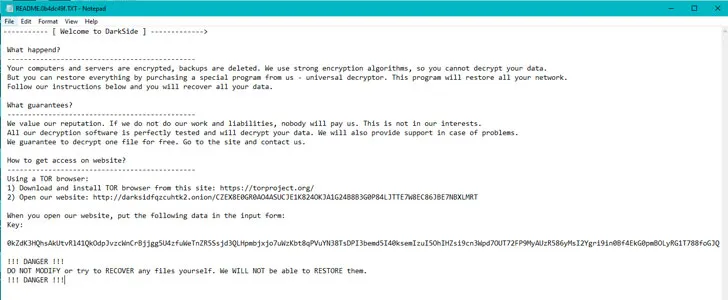
Photo: Unknown authorUnknown author, Public domain, via Wikimedia Commons
The call comes in at 3 a.m. A hospital administrator in the Midwest has just discovered that every networked device in the facility is displaying the same message: a ransom demand, a countdown timer, and an onion-routing address for a dark web chat portal. Patient records are encrypted. Surgical scheduling systems are offline. The pharmacy dispensing network has gone dark.
Within the hour, a specialist from an incident response firm is on the phone. Within six hours, a professional ransomware negotiator — a role that did not exist as a formal profession a decade ago — is composing the organization's first message to its attackers.
This is the ransomware negotiation ecosystem: a parallel economy operating at the intersection of cybercrime, crisis management, and geopolitics. It is staffed by former law enforcement agents, military intelligence veterans, forensic accountants, and, occasionally, reformed hackers. It processes hundreds of millions of dollars in ransom payments each year. And it operates under a legal and ethical framework that remains deeply contested.
The Architecture of a Ransomware Attack
To understand what negotiators do, it helps to understand the industrial structure of modern ransomware operations. The days of lone hackers deploying self-written malware from basement apartments are largely over. Today's ransomware landscape is dominated by Ransomware-as-a-Service (RaaS) models — franchise-like arrangements in which a core developer group creates and maintains the malware and infrastructure, then licenses it to affiliate operators who conduct the actual intrusions.
This division of labor has made ransomware attacks simultaneously more scalable and more dangerous. Core groups such as LockBit, ALPHV/BlackCat, and Clop — all of which have been the subject of significant law enforcement actions in recent years — have operated like technology companies, complete with customer service portals, bug bounty programs, and reputational management strategies. The "customer," in this context, is the victim organization that must decide whether to pay.
The ransom demand itself is rarely the final number. It is, in most cases, an opening position in a negotiation — and the groups behind it know it. "They are not irrational actors," explained one incident response professional who asked to be identified only by their firm's general practice area. "They want money that can realistically be paid. A demand for $10 million from a mid-sized manufacturer is theater. The actual settlement is often a fraction of that."
What Negotiators Actually Do
The role of a professional ransomware negotiator is often mischaracterized as simple haggling. In practice, it encompasses a broader set of functions that are as much intelligence-gathering as they are transactional.
During the initial phase of contact, negotiators attempt to verify several critical facts: whether the attackers actually possess the decryption key they claim to hold, whether data has been exfiltrated (a common secondary leverage tactic known as "double extortion"), and which threat actor group is responsible. Attribution matters because different groups have different reputations for honoring agreements, different technical capabilities, and different geopolitical contexts that affect the legality of payment.
The last point is not abstract. The US Treasury Department's Office of Foreign Assets Control (OFAC) maintains a list of sanctioned entities — including several ransomware groups with confirmed ties to nation-state actors — with whom financial transactions are prohibited under US law. Paying a ransom to a sanctioned group can expose the victim organization to substantial civil penalties, regardless of whether the payment was made under duress. Negotiators and their legal counsel must conduct rapid due diligence on attribution before any payment is authorized.
"The decision to pay is never purely financial," said a cybersecurity attorney who has advised Fortune 500 companies through ransomware incidents. "You have legal exposure, reputational exposure, and the practical question of whether paying actually restores your operations. Sometimes it doesn't."
The Pay-or-Rebuild Calculus
The question of whether to pay a ransom is one of the most contested issues in cybersecurity policy. The FBI's official guidance discourages payment on the grounds that it incentivizes further attacks and funds criminal enterprises. The Cybersecurity and Infrastructure Security Agency (CISA) echoes this position while acknowledging that individual organizations must weigh their own operational realities.
In practice, the calculus is rarely straightforward. For a hospital system with patients in intensive care, the cost of extended downtime — measured in both financial terms and human lives — may be judged to outweigh the cost of payment and its downstream effects. For a manufacturer whose production line has been idle for two weeks, the competitive damage of continued disruption may exceed the ransom figure by a significant multiple.
The 2021 Colonial Pipeline attack, in which the DarkSide group disrupted fuel supplies across the East Coast, resulted in a $4.4 million ransom payment that the company's CEO publicly described as a painful but necessary decision. The FBI subsequently recovered approximately $2.3 million of that payment by seizing a cryptocurrency wallet — a demonstration of both law enforcement capability and its current limits.
The 2021 attack on meat processing company JBS USA, attributed to the Russia-linked REvil group, resulted in an $11 million payment. JBS executives stated that the payment was made to prevent further disruption and to protect customers. REvil was subsequently disrupted in a coordinated multinational law enforcement operation, though the group resurfaced under different configurations within months.
What Law Enforcement Is Doing — and Where It Falls Short
The past three years have seen an unprecedented escalation in law enforcement action against ransomware infrastructure. Operation Cronos, the 2024 multinational effort targeting LockBit, resulted in server seizures, the arrest of affiliates across multiple countries, and the public unmasking of the group's alleged administrator. The operation also demonstrated a new law enforcement tactic: using seized infrastructure to publish information about the group's internal operations, undermining its reputation among potential affiliates.
The FBI's Cyber Division has expanded its use of blockchain analytics to trace ransom payments through cryptocurrency networks, and has worked with the private sector to develop decryption tools that allow victims to recover data without paying. CISA operates a free ransomware vulnerability warning pilot program that proactively notifies organizations when their systems contain vulnerabilities known to be exploited by ransomware groups.
Despite these advances, structural challenges persist. The majority of ransomware operators are based in countries — primarily Russia, but also Iran and North Korea — that do not extradite nationals to the United States and have historically declined to prosecute cybercriminals who restrict their activity to foreign targets. Arrests occur at the margins: affiliates who travel internationally, operators who make operational security mistakes, or individuals caught up in broader financial crime investigations.
"Attribution is not the hard part anymore," noted a former federal agent who now works in the private sector. "The hard part is jurisdiction. We know who many of these people are. We just can't reach them."
The Geopolitical Dimension
Ransomware is increasingly understood not merely as a criminal enterprise but as an instrument of geopolitical pressure. The concentration of ransomware operators in Russia, and the historically permissive posture of Russian authorities toward attacks on Western targets, has led senior US officials to describe ransomware as a national security issue rather than a law enforcement one.
The Biden administration elevated ransomware to a national security priority following the Colonial Pipeline and JBS attacks, and convened a 30-country Counter Ransomware Initiative that has since expanded to more than 50 nations. The initiative focuses on improving collective resilience, disrupting ransomware payment flows, and coordinating on sanctions and diplomatic pressure.
For the organizations that find themselves in the ransom room at 3 a.m., however, geopolitics is a distant abstraction. What matters in that moment is whether the files can be recovered, whether the business can survive, and whether the negotiator on the other end of the line can find a path through the crisis. The fact that such a profession now exists at scale is, in itself, a measure of how thoroughly ransomware has reshaped the American security landscape.