The House That Listens: Six Quiet Leaks in Your Connected Home
The connected home was sold as convenience, and in many respects it delivers. But every smart speaker, doorbell, and thermostat is also a sensor array pointed at your private life, and the record of the past several years — enforcement actions, breaches, and quiet policy changes — suggests the devices are keeping notes. What follows is not an argument to smash your gadgets. It is an argument to know what they're saying about you, and to decide deliberately what they're allowed to say.
1. The Doorbell That Watched the Whole Neighborhood
Video doorbells made headlines when it emerged that Ring had provided employees and contractors with unfiltered access to customer video footage, and later when its partnership with law enforcement drew scrutiny from lawmakers over how camera networks and the Neighbors app could turn private doorbells into a distributed surveillance grid. The Federal Trade Commission ultimately reached a settlement with the company over privacy and security failures, including lax account security that let strangers hijack cameras.
Harden it today: enable two-factor authentication on the camera account, prune who has shared access, disable law-enforcement request portals if your device offers one, and set motion zones so the camera covers your property — not the sidewalk, street, and neighbors' yards.
2. The Assistant That Kept the Transcripts
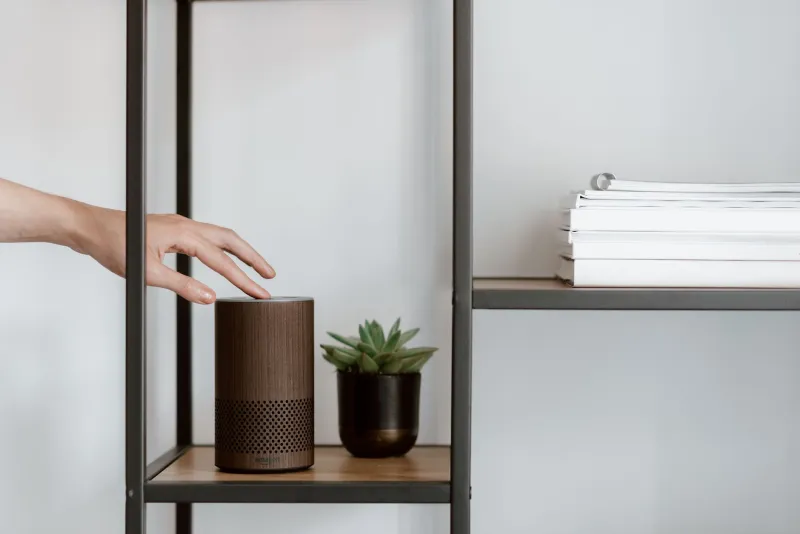
Voice assistants store recordings to 'improve the service,' which in practice means human reviewers may listen to clips captured in your living room — sometimes accidentally, as contractors in several countries revealed after leaking samples of overheard private moments. Regulators in Europe fined major platforms over the practice; US users mostly learned of it from reporting.
Harden it today: open the assistant's activity dashboard and delete stored voice history, ideally on an auto-delete schedule of three months; mute the physical microphone when not in use; and decline every 'share recordings to improve services' toggle, which is typically off by default and typically re-enabled by updates.
3. The TV That Sold Your Viewing Habits
Smart TVs pioneered a category of surveillance called automatic content recognition — software that identifies what's on screen, whether it's broadcast, streamed, or a game, and sells that viewing data to advertisers. Vizio's now-famous settlement with the FTC and state attorneys general established that collecting this data by default, without clear consent, was unfair and deceptive. The practice has since spread across the industry.
Harden it today: disable ACR in the TV's privacy settings (the naming varies by brand), decline personalized advertising during setup, and if the TV is a dumb screen you've made smart, consider never connecting it to Wi-Fi at all — a streaming stick with its own privacy settings is often the lesser evil.
4. The Appliance That Phoned Home About Breakfast
Connected refrigerators, dishwashers, and washing machines collect usage telemetry that manufacturers describe as diagnostics. The problem is scope creep: telemetry that begins as error codes can expand into usage patterns, occupancy inference, and cross-device tracking tied to your account. Firmware neglect compounds the risk — appliances are rarely patched, and researchers have repeatedly demonstrated attacks against unpatched connected appliances on home networks.
Harden it today: ask whether the appliance needs the internet to perform its function. A refrigerator that orders groceries is a subscription; one that keeps food cold is a box. For devices you do connect, register them under a dedicated email, decline marketing data sharing, and keep them on a separate network.
5. The Hub That Knew When You Weren't Home
Smart thermostats, occupancy sensors, and geofencing apps collectively produce a diary of when your house is empty — information that is commercially valuable to advertisers and, if it leaks, plainly useful to burglars. Several smart-home platforms have suffered breaches exposing account credentials, and weak or reused passwords remain the most common way into camera and lock systems.
Harden it today: use a unique password from a password manager for every smart-home account, enable two-factor authentication everywhere it's offered, and set geofencing and 'away mode' features conservatively so your status isn't broadcast to shared accounts or third-party integrations you've forgotten about. Audit those integrations annually; abandoned apps retain access until revoked.
6. The Data That Outlived the Device
The FTC's actions against health-tracking and ad-tech firms, and its growing attention to 'surveillance by default' across connected products, share a theme: data collected by smart devices frequently outlives the device itself, flowing to brokers and analytics firms under policies few users read. When a manufacturer shuts down a cloud service, users often discover their years of history are simply gone — or worse, transferred in a bankruptcy sale.
Harden it today: before buying, check whether the manufacturer publishes a data-retention policy and whether the device functions offline. Prefer products with local processing. And when you retire a device, factory-reset it and delete the associated account and its history — the same deletion discipline, incidentally, that applies to every app on your phone.
The Tradeoff, Made Consciously
None of this requires rejecting the smart home. It requires treating each device as a transaction: what data am I giving, to whom, and what am I getting back? Regulators are catching up, slowly, and enforcement actions like those against camera makers and TV manufacturers have real teeth. But the enforcement that matters most is the kind that happens in your settings menu — quiet, free, and available today.